
TOPICS
DE&I
The Future of
the Fund Industry
Shaped by DE&I
— ANRI’s Commitment
to Setting Numerical
Targets for Investing
in Women
Entrepreneurs —
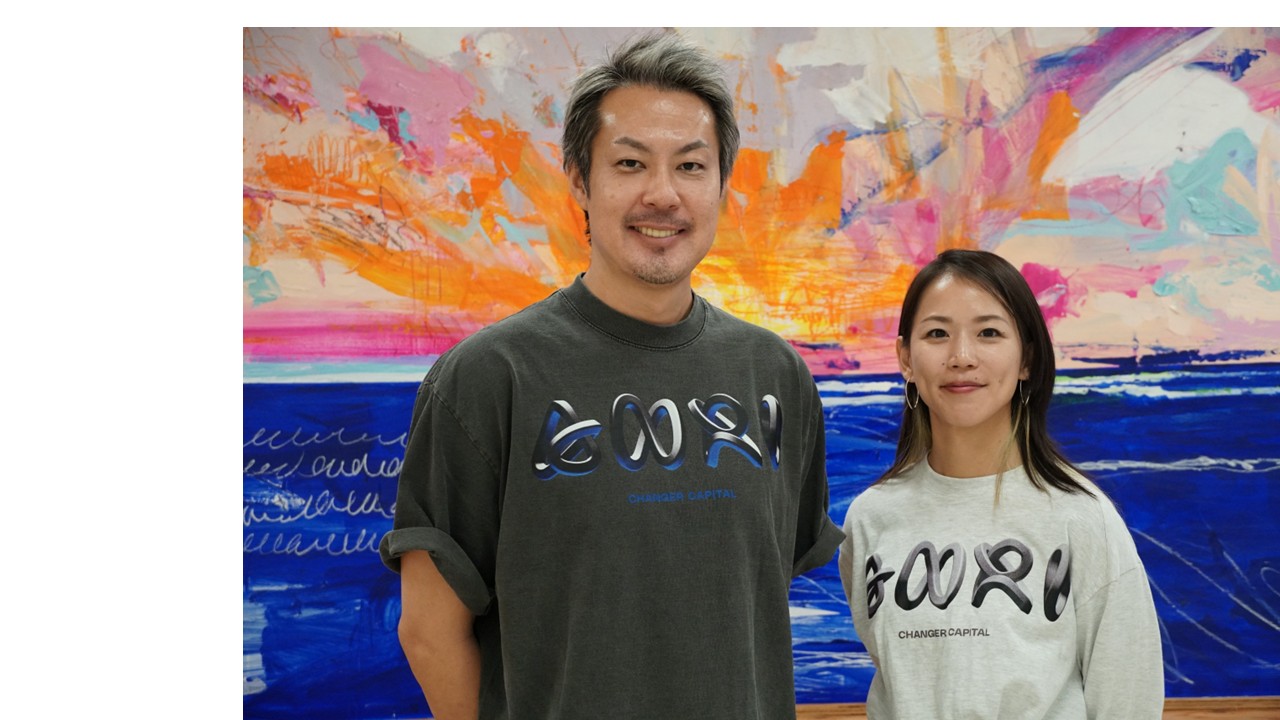
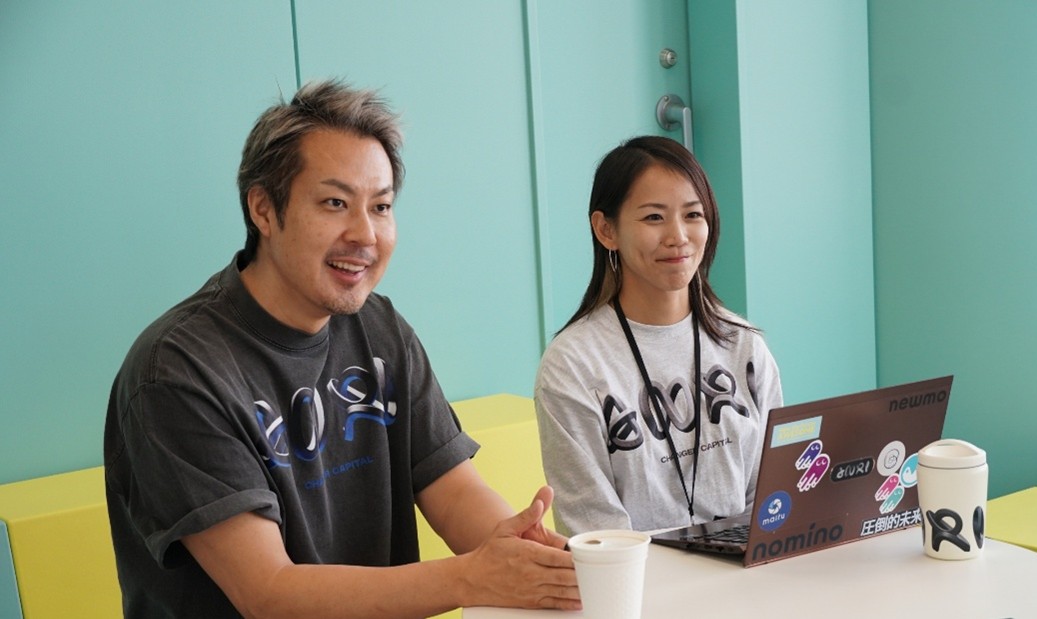
As part of JIC Group’s DE&I efforts, we are advancing initiatives with the overarching near‑term goal of “Promoting the active participation of women in the Japanese fund industry.” In line with this, we have decided to introduce on our website examples of initiatives undertaken by our portfolio VCs. For the first installment, members of JIC’s Fund Management team, who are responsible for post-investment monitoring, interviewed Mr. Junichiro Kono, General Partner at ANRI—one of JIC’s portfolio firms actively investing in female entrepreneurs—and Ms. Kaoru Sasaki from ANRI’s Enablement Division.
■Interview with Mr. Kono on the Background and Specific Initiatives Behind ANRI’s Numerical Target for Investment in Women Entrepreneurs
“Leading the Way in Investment in Women Entrepreneurs for an ‘Beyond Future’”
Q. Could you tell us about ANRI’s goals for investment in women entrepreneurs?
Junichiro Kono, General Partner In 2020, we announced a Positive Action1 for our then active ANRI Fund IV: “to raise the ratio of investments in women entrepreneurs to 20%.” At that time, the three GPs—Samata, Sameshima, and myself—were all men born in the Showa era, which meant that we were very similar in terms of gender and generation. Naturally, our portfolio tended to include founders with similar attributes. However, we realized that this was not the “Beyond Future” we were aiming for. We decided to take the lead ourselves and actively pursue investment in women entrepreneurs. When we examined our portfolio at the time, the proportion of women entrepreneurs was only about 5%, which was very low. Therefore, within ANRI Fund IV, we set a target of 20% and announced this numerical goal both inside and outside the firm. In so doing, we committed ourselves to achieving it.
Q. You achieved your target about a year and a half. Were there any challenges?
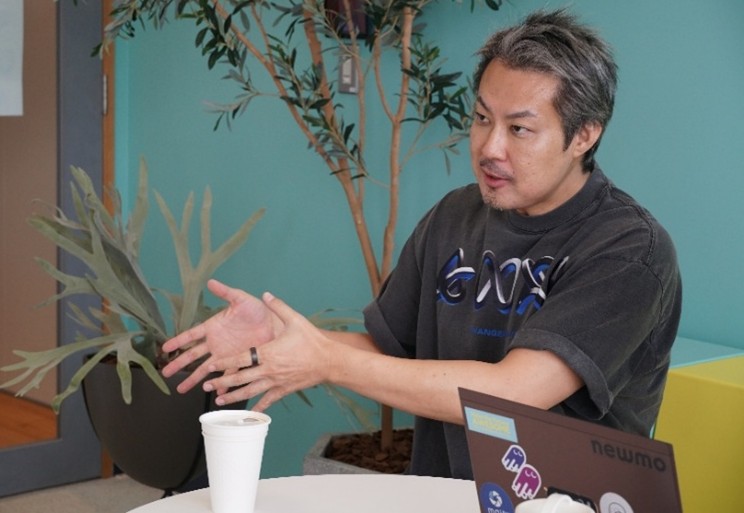
Kono Yes, 20.4%, but it was not simply a matter of “investing because they are women.” We needed to carefully assess whether each investment could truly generate value for the fund. ANRI mainly focuses on seed investments, but without being bound by that framework, we actively created opportunities to invest in women entrepreneurs with strong growth potential, while clearly communicating the intent behind our positive action. As a result of continuing these efforts, today the “20% ratio for women entrepreneurs in our portfolio” has become a de facto standard for ANRI.
Q. In advancing investment in women entrepreneurs, did you encounter any challenges within the firm or with investors that you had to overcome?
Kono Within the firm, the GPs first took the initiative to demonstrate our commitment to achieving the target. We also made sure to keep the goal front of mind by reviewing current KPIs together at weekly meetings. Some LPs (Limited Partners, i.e., fund investors) misunderstood and thought we were sacrificing performance to invest in women entrepreneurs. We therefore explained carefully that investment in women entrepreneurs and strong returns can go hand in hand.
Q. What kind of reactions did you receive from women entrepreneurs?
Kono Many women entrepreneurs had personally experienced the challenges of the male dominated structure of the startup industry, so our initiative was welcomed and supported.
“ANRI as an Investor: Supporting Women Entrepreneurs Through Investment”
Q. What challenges led to the creation of “UNLOCK,”2 which is aimed at investing in women entrepreneurs?
Kono Between internet investments and deep tech investments, there was already a difference in the proportion of women entrepreneurs, which sometimes made it difficult to maintain consistency when linking incentives and evaluations. In addition, since budgets tended to be concentrated on large deals or follow on investments, we thought that setting aside a separate budget and formalizing it as a program would allow us to provide more ideal support. Furthermore, as we advanced our support for women entrepreneurs, we realized that not only were there fewer women in the entrepreneurial community, but there was also a clear gap between men and women in terms of information and knowledge sharing. Men naturally formed circles—“let’s grab a drink,” “teach me about this”—but for women, joining those groups could feel like a psychological hurdle. That is why we launched UNLOCK—by intervening to help close the information gap and foster a community, we hoped to prevent unnecessary struggles caused by a lack of access to knowledge. And because our core business is investing, we chose to implement UNLOCK not as study sessions, but as an investment program.
Q. Are there any particular features or innovations within UNLOCK?
Kono UNLOCK is a program that requires participants to join ANRI’s incubation facility, CIRCLE by ANRI (“CIRCLE”). We believe it is important for early stage entrepreneurs to immerse themselves in an environment where they can be showered with information and inspired by one another. Simply telling people “feel free to talk” can be difficult, so within CIRCLE we have created mechanisms such as “if you invite members from other companies to interact, drinks at the café are free.” These kinds of initiatives help activate the community across gender and generation. In terms of overall awareness among our portfolio companies, rather than UNLOCK specifically, we also value the “family first” policy of our managing partner, Samata. Venture capital and startup work cannot be sustained without the understanding of one’s family. If you speak of “changing the world” or “creating an overwhelming future,” the first question is whether you can take care of your own family. This culture has taken root not only within ANRI but also among the entrepreneurs we support.
Q. ANRI has women capitalists on the team. Does that provide reassurance to women entrepreneurs participating in UNLOCK?
Kono I believe it does. Currently, ANRI has three women capitalists, and it is certainly easier for women to make first contact with other women. At the same time, I think it would be a shame if entrepreneurs limited their own potential simply because they felt “they are hard to approach.” That is why we strive, as a VC, to create an environment that is easy to access. We also hope entrepreneurs will not hesitate to reach out and engage with us.
Q. What are your future prospects for UNLOCK?
Kono Ultimately, we want to reach a point where there is no need for a special women entrepreneur investment program—where we simply invest because a company is promising, and it happens to be led by a woman. I believe we are already beginning to see change. As benchmarks and role models emerge, more people are starting to think, “maybe I can do it too,” and the momentum is clearly building. With the election of a woman prime minister, many women have gained confidence, and as such examples spread, I feel that a bright future lies ahead.
■Interview with Ms. Sasaki on ANRI’s Internal Promotion of DE&I in Support of Investment in Women Entrepreneurs
“Making DE&I Challenges Personal”
Q. Achieving the target for investment in women entrepreneurs requires internal understanding of DE&I. How did ANRI begin promoting DE&I within the firm?

Sasaki In April last year, we launched an internal project to promote DE&I. The background was our goal of raising the ratio of investments in women entrepreneurs to 20%. To achieve this, we aimed to elevate the organization’s overall knowledge and to make DE&I challenges personal. Mr. Kono also advised us that “an offhand remark can potentially damage someone’s career or the reputation of the fund.” Based on this, we have been continuously conducting various all hands training sessions, such as unconscious bias workshops, to deepen understanding and raise the level of knowledge.
Q. What specific initiatives have you implemented?
Sasaki We conduct external training three to four times a year, but we make sure it doesn’t end up as mere classroom learning. We create more touchpoints for engaging with knowledge and information. For example, every Monday at 3 p.m. during work hours we hold a “Yuru Café” session, providing a space where people can talk freely about DE&I or everyday difficulties. We also incorporate accessible activities such as movie events.
Q. You’ve also implemented Active Bystander training.
Sasaki Through roleplaying, participants experience real situations—for example, how to help someone who is being harassed at an event. This allows them to experience the difficulties and frustrations firsthand. Roles are not assigned by age or gender, so participants can experience perspectives that are different from their own. This design helps them engage with the situation as a “personal matter.” It is very meaningful training.
Q. Did any study sessions receive particularly strong feedback?
Sasaki The LGBTQ+ training we conducted last year received especially strong feedback. We held multiple preparatory meetings with the instructor to ensure the content reflected both social developments and business relevance. After each session, we conducted surveys. Following each round, participants increasingly internalized DE&I issues as their own. As a result, DE&I training is no longer seen merely as a place to acquire knowledge, but as an important initiative for protecting careers and cultivating organizational trust. I feel it has become firmly embedded within the company.
1 Positive Action is difficult to define unambiguously, but generally refers to temporary measures taken to achieve substantive equality of opportunity by providing special opportunities within certain limits to those disadvantaged by social or structural discrimination. (Translation of the Gender Equality Bureau, Cabinet Office of Japan definition)
2 UNLOCK is ANRI’s investment program dedicated to women entrepreneurs. For details, please see here. (Japanese only)
(Titles and positions are as of the date of this interview.)