
TOPICS
DE&I
The Future of
the Fund Industry
Shaped by DE&I
— Exploring
the Potential of
Women Venture
Capitalists with
VC Managers —
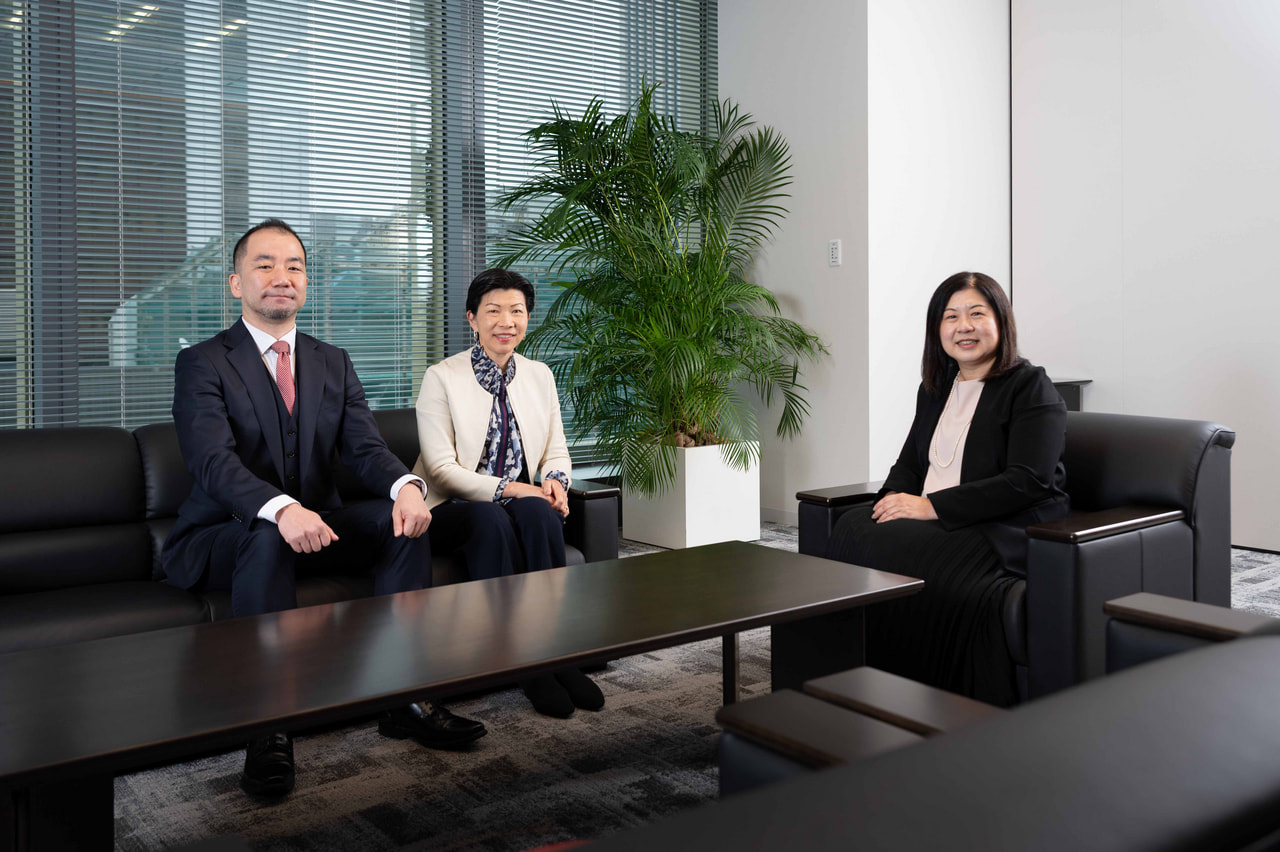
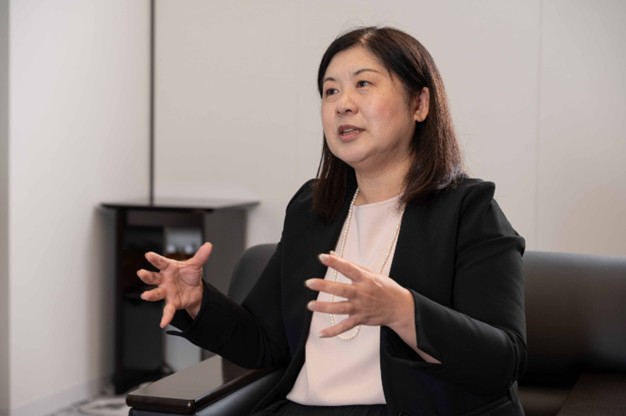
As part of JIC Group’s DE&I efforts, we are advancing initiatives with the overarching near‑term goal of ““Promoting the active participation of women in the Japanese fund industry.” In line with this, we have decided to introduce on our website examples of initiatives undertaken by our portfolio VCs. For the second installment, we present a discussion featuring Kathy Matsui, General Partner of MPower Inc. (hereafter “MPower”), a JIC portfolio VC actively engaged in the recruitment and development of women capitalists; Kengo Ueha, Managing Director, General Partner of Beyond Next Ventures Inc. (hereafter “BNV”); and Yuka Hata, Senior Managing Director, Head of Fund Investments at JIC.
“Implementing DE&I Values in Young Startups”
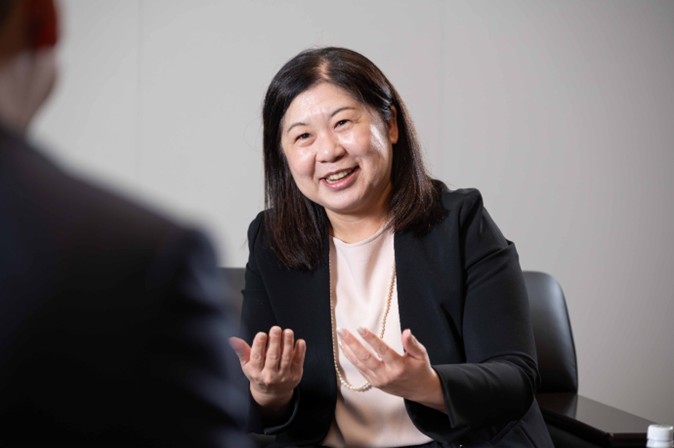
Yuka Hata, Senior Managing Director, Head of Fund Investments In December 2024, JIC made the establishment of codes of conduct and ethics, as well as anti‑harassment policy, a requirement for investment, with the aim of strengthening governance structures and promoting DE&I in the startup and investment industries. In the VC sector, the number of women capitalists (investment professionals) is extremely small, and very few women are involved in decision-making. In light of this situation, JIC Group has set ““Promoting the active participation of women in the Japanese fund industry” as the overarching goal of its DE&I initiatives, along with specific numerical targets1. We believe DE&I should be regarded not only as an ethical initiative but also as a source of competitiveness. BNV, for example, has been actively advancing the recruitment of women capitalists.
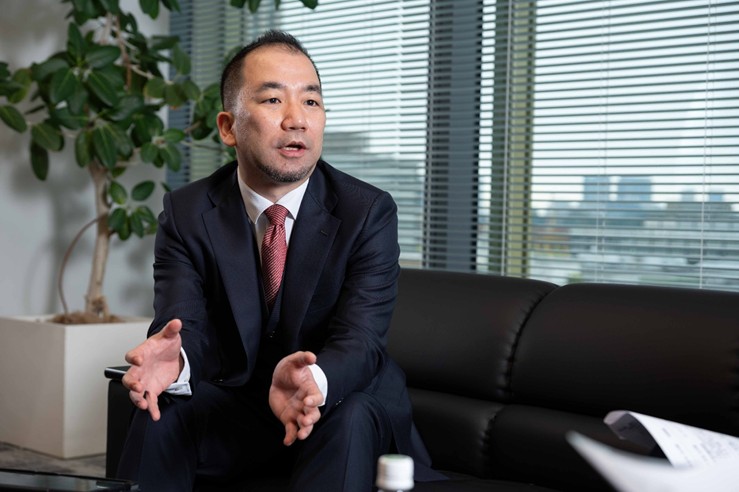
Kengo Ueha, Managing Director, General Partner, BNV In 2014, we founded BNV, focusing on investing in deep tech startups from the seed stage. From the very beginning, I was conscious of bringing in members with diverse expertise. In 2021, the hiring of an Indian team member made me realize firsthand how diversity brings new perspectives to the team, and this led me to want to further advance gender diversity as well. Since the proportion of women in university science faculties is about 20%, I felt it natural that at least 20% of capitalists should be women. In 2023, we set that 20% as our target, and achieved it the following year (3 out of 15 front‑office members are women).
Hata So by setting a target, your stance on recruitment became clearer, and awareness also changed.
Ueha If we proceed with recruitment in a natural way, the number of candidates who are men tends to be higher. Therefore, we organized events specifically for women interested in the deep tech field, and explained to recruitment agencies our policy of strengthening diversity hiring. This increased our contact points with candidates, and even at the interview stage we consciously raised the proportion of women.
Hata MPower, with three women at the top, gives the impression that DE&I is being advanced quite naturally.
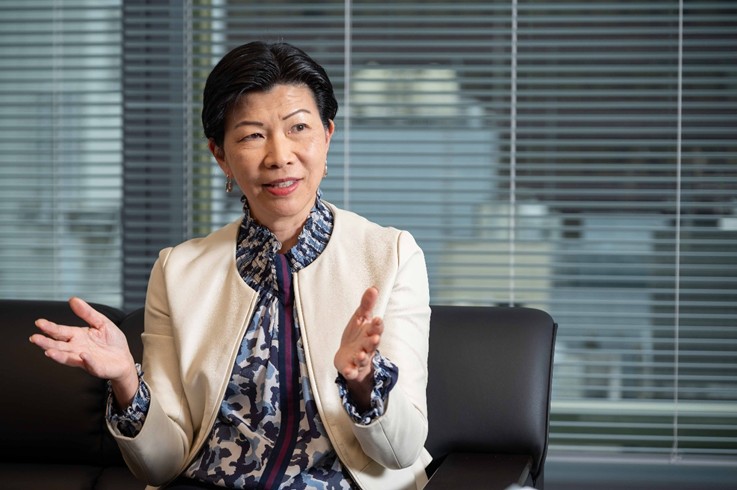
Kathy Matsui, General Partner, MPower MPower is a global VC with a strong focus on ESG, and one of our strategic policies is to promote DE&I. People sometimes ask whether ESG is necessary in venture investment. From my 30 years of experience analyzing domestic listed stocks in my previous role, I came to realize that organizations, like people, find it difficult to change once they have grown to a certain stage. That is why, when launching our fund, we hypothesized that if we could embed ESG and DE&I values at the startup stage—when companies are like teenagers—we could accelerate their growth. Concretely, before making an investment decision, we prepare a memorandum on ESG and ask the investee to select the ESG items most important to them. After investing, MPower accompanies and supports the investee in their ESG initiatives.
Hata Throughout your career, have there been initiatives that you have consciously pursued?
Matsui To foster creative ideas, I have worked to build diverse teams—not only in terms of gender but also career background. In meetings, I make a point of encouraging those who have not spoken to share their views, thereby creating an environment where everyone can express opinions equally, and I try to incorporate as many perspectives as possible. I can also share one of my personal “secret techniques.” In my previous role, meetings with our U.S. headquarters often coincided in Japan with the time when I needed to bathe and put my children to bed. So I would review the agenda in advance, prepare one or two questions, ask them at the beginning of the meeting, and then continue participating while caring for my children. In this way, I believe I was able to demonstrate an active stance in participating. Women often feel they must deliver perfect comments, and I think breaking down that barrier is important.
“Hybrid Approach to Developing Capitalists”
Hata Retention after hiring is even more important. Are there any particular initiatives at BNV?
Ueha We make use of external advisors on DE&I and continue to advance work style reforms such as introducing flexible work and remote work, so that members can balance their careers with childcare or nursing care. This is not limited to women, but since many new hires join without prior experience in investment, we believe that training is also crucial for retention. My co representative Ito and I both entered the VC industry straight out of university with no prior experience, and we accumulated various practical investment experiences from that starting point. Based on our own real-life experiences, we provide support to help newer members avoid common stumbling blocks and to highlight what they should be mindful of in order to master investment practices. In this way, we can help advance their development.
Hata As awareness of DE&I grows, it creates a virtuous cycle in which the environment improves and leads to stronger retention of talent. Do you have systems such as mentorship programs that provide regular support for women?
Matsui We don’t have a formal mentorship system, but since we are a small organization, all GPs and partners play roles similar to mentors. Some people describe a VC as being like a “sushi restaurant”—that is, investment work is often learned by watching. However, when we interviewed younger women capitalists, many expressed the desire to have a clear roadmap—looking five or ten years ahead—showing what specific steps they should take to reach the next level, along with the evaluation criteria. In large corporations, it is easier to envision career planning, but in the VC industry, regardless of gender, it takes time before results appear, making career planning harder to imagine. That is why we hold regular one on one meetings to think together about what should be achieved within a certain period, and we strive to clarify the company’s evaluation criteria for stepping up from Associate to Vice President, Principal, and Partner.
Hata Improving the clarity of career planning through communication and milestones is important. I feel that new forms of communication are needed in the VC industry, and perhaps even the senior leadership of VCs are grappling with this challenge.
Ueha We are advancing development through a hybrid approach: combining detailed communication with the traditional “learn by watching” method. VC work relies heavily on experience, and many things cannot be learned in a classroom. For example, when working with entrepreneurs, knowing what to say in a given situation is often learned by observing the behavior of experienced capitalists. In terms of training and retaining talent, we believe it is important to establish regular opportunities for communication, so we can understand and address concerns about career prospects or balancing work with private life, and think them through together. For this reason, we have built and operate a system of regular meetings with partners, HR staff, and members from different reporting lines. As mentioned earlier regarding career milestones, VC investment often takes five years, sometimes seven to ten years, before returns are realized. Therefore, finding ways to evaluate individual performance during that long interim period is essential, and we are taking a trial-and-error approach.
Hata It takes considerable time to develop talent with no prior investment experience into decision makers. How can we increase the number of women involved in decision making, and how can we shorten the training period?

Ueha I understand that LP investors who entrust their capital to a VC generally confirm the individual investment track record of the fund’s decision makers to determine whether they have sufficient ability and experience to be entrusted with investment decisions. At the same time, generating returns from investments takes time, regardless of gender. Rather than relying solely on the orthodox approach, I believe there is room to demonstrate suitability as a decision maker by showing achievements in areas such as sourcing or value up activities for portfolio companies—results that can be comparable to investment returns. In the context of the VC industry, where there are still few women decision makers, this could serve as one possible solution.
“Discussions Needed Regarding the Economic Rationality of Diversity Driving Investment Performance”
Hata What do you see as the merits of increasing the number of women decision makers in the VC industry?
Ueha I think the key point is not simply gender, but having members with diverse backgrounds in the decision making arena, which raises the quality of decisions.
Matsui Even in the U.S., men overwhelmingly dominate the VC industry. However, Harvard Business School published a study analyzing the composition of VC investment teams and their outcomes, which found that teams with higher diversity showed significantly higher returns. This research attracted considerable attention. Without economic rationality, there may be little motivation to take DE&I seriously, but the study demonstrated that DE&I improves performance, providing that rational basis. Of course, it is important for leadership to understand the significance of DE&I initiatives, but the challenge ahead is how to embed them throughout the organization.
Hata In terms of demonstrating economic rationality, I think it is important for women capitalists to bring unique value. By not simply conforming to majority opinions and instead offering new perspectives, the screening process in fund investment activities becomes richer, which in turn contributes to performance creation.
Matsui There is also the challenge of how to handle the friction that arises from differing opinions. For example, in recruitment, deliberately bringing in people who may not seem to fit the existing culture may be necessary from the perspective of diversity. In the VC industry, divergent opinions in the investment committee often generate outstanding returns. This means that talent who can bring breakthrough ideas are essential.
“Responding to Unique Entrepreneurs Requires Diverse Capitalists”
Ueha Entrepreneurs who take risks and challenge themselves often exhibit strong individuality, such as unique ideas or exceptional drive. To engage with them effectively, VCs also need diversity among their capitalists. In the deep tech field, the gap in thinking between the initial project leaders—university researchers—and capitalists is particularly broad, so having members with different backgrounds, knowledge, and areas of expertise is critically important. I have also heard from researchers that they find it easier to consult with capitalists of the same gender, which makes me realize that gender diversity is also needed on the capitalist side. At the same time, I believe it is crucial for VCs to create an environment where anyone can feel comfortable seeking advice, regardless of gender.
Matsui One factor behind the small number of women entrepreneurs is that there are few women investors. In terms of hiring capitalists, both in Japan and the U.S., there is a tendency to recruit from elite universities, investment banks, or consulting firms. As a result, organizations become highly homogeneous, which may contribute to an environment where innovation is less likely to occur.
Hata The need for diversity on both the entrepreneur side and the investor side is an important perspective. Both BNV and MPower are advancing ground-breaking DE&I initiatives—how do you view efforts across the industry as a whole?

Matsui I serve as DE&I Committee Chair of the Japan Venture Capital Association (JVCA). Last year, we conducted our second DE&I survey2 among member firms, but I feel we are still only halfway there. To increase the number of women capitalists and entrepreneurs, it is important for people to actually see women active in the startup industry. At MPower, when we participate in startup related events, we request that 20% of speakers be from minority groups, and we sometimes recommend speakers ourselves. Training is also useful. At JVCA, we ask external consultants to carefully prepare content to ensure that it is tailored to participants and reflects an understanding of the challenges of the VC industry. After each training, we provide appropriate feedback to teams and repeat the process of organizational improvement, which I believe is essential.
Hata You are also advancing concrete initiatives to promote DE&I at BNV, aren’t you?
Ueha We have always made an effort to communicate our activities, but we are continuing to highlight the work of our women capitalists and to host events introducing women leaders who are active in decision making positions, or close to them, within our portfolio startups. In this way, we aim to present diverse role models.
“Recruitment, Development Environment, and Leadership Commitment Unlock the Potential of Women Capitalists”
Before we close, could you share a message for women aspiring to enter the VC industry?
Ueha I love the work of venture capital—creating future society together with outstanding entrepreneurs who are challengers. I have been in this profession since joining the VC industry straight out of university. Recently, with growing attention on startups and VC, the number of participants in the industry has increased significantly, and I really feel that the ecosystem is evolving. I believe stakeholder diversity will continue to expand, so I hope that people with experiences and strengths that can bring fresh perspectives to the industry will join us.
Matsui VC is a profession that allows you to help create the future. It is exciting to think that you can solve deep social challenges and change the world with new technologies. From the outside, the VC industry may look like a black box, and it can be hard to envision a career in venture capital. Moreover, investment work requires a wide range of skills—from sourcing to execution to post investment support. But it is also a place where you can build your career from scratch, deepen your expertise through broad experiences, and grow. I believe that the number of women in the VC industry will increase, but whether the number of women decision makers will grow is a challenge for Japan’s VC industry. The addition of DE&I and governance requirements to JIC’s investment criteria has provided strong stimulus to LPs and asset owners, and I hope this will lead to a broader movement. I am hopeful that Japan’s VC industry can gradually change.
Hata Thank you for your valuable messages. I believe women are a gender that instinctively takes action on social issues. A team member once told me, “LP investment is like mixed martial arts,” and I think this applies to VC as well, since it requires diverse skills such as networking, issue analysis, and handling numbers. That is why I believe the role of capitalist suits women. With improvements in recruitment practices, workplace environments, and leadership commitment, women’s strengths can be fully unleashed, ultimately maximizing VC performance. I hope today’s discussion can be shared with colleagues across the VC industry, and that together we can further advance the promotion of women’s participation.
1 JIC Group DE&I Goals
<Targets>The JIC Group will achieve across all of its domestic investee funds:
(1) In 10 years, 40% of investment professionals at all investee funds will be women
(2) In 10 years, 20% of all investee funds will include women in their decision-making bodies
<Targets>JIC Group-wide composition:
(1) By 2030, the group-wide ratio of women will be 40% or more
(2) By 2030, the group-wide ratio of women in the front office will be 30% or more
(3) By 2030, the group-wide ratio of women involved in management and investment decision-making will be 30% or more*
* For updates on JIC’s progress toward these goals, please see here.
2 DE&I survey conducted by the Japan Venture Capital Association (JVCA). For details, please see here.
